Maintaining optimal indoor air quality (IAQ) is not merely a comfort consideration; it directly impacts occupant health, productivity, and the longevity of building structures. For facility managers, property owners, and homeowners alike, understanding the mechanics of IAQ is foundational to implementing effective environmental controls. This knowledge allows for informed decisions regarding ventilation systems, material choices, and operational protocols, moving beyond reactive problem-solving to proactive environmental management that supports well-being and preserves assets. Understanding these fundamentals helps in avoiding common mistakes that affect air quality and can lead to significant problems down the line.
Understanding the Core Components of Indoor Air Quality
Contaminant Sources
Indoor air quality is primarily defined by the presence and concentration of various pollutants originating from both internal and external environments. These contaminants fall into several categories, each with distinct health implications and mitigation strategies. Volatile Organic Compounds (VOCs), for instance, are emitted as gases from certain solids or liquids, including paints, cleaning supplies, furnishings, and office equipment. Exposure can lead to respiratory irritation, headaches, and in some cases, more severe health effects. Particulate matter (PM), categorized by size such as PM2.5 (particles less than 2.5 micrometers in diameter), includes dust, pollen, pet dander, and combustion byproducts from cooking or heating. These fine particles can penetrate deep into the lungs, exacerbating respiratory and cardiovascular conditions. Biological contaminants encompass mold, bacteria, viruses, and allergens like dust mites, thriving in humid conditions and contributing to allergies, asthma, and infectious diseases. Understanding these categories and examples of indoor air pollutants is the first step toward effective management.
Ventilation and Air Exchange
Ventilation is the process of introducing outdoor air into an indoor space and removing indoor air, serving as a critical mechanism for diluting and expelling accumulated pollutants. Natural ventilation relies on passive airflow through windows, doors, and other openings, driven by wind pressure and thermal buoyancy. While cost-effective, its effectiveness is often inconsistent and dependent on external weather conditions. Mechanical ventilation, conversely, uses fans and ductwork to actively supply and exhaust air, offering more controlled and consistent air exchange rates. Systems like exhaust fans in bathrooms and kitchens target specific pollutant sources, while whole-house ventilation systems ensure a continuous supply of fresh air throughout a building. Energy Recovery Ventilators (ERVs) and Heat Recovery Ventilators (HRVs) are advanced mechanical systems that recover energy from exhaust air, pre-conditioning incoming fresh air to reduce heating and cooling loads.
Humidity Control
Relative humidity plays a significant role in IAQ, influencing both occupant comfort and the proliferation of contaminants. High humidity levels (typically above 60%) create ideal conditions for mold growth, dust mites, and bacteria, leading to musty odors and potential health issues. Conversely, excessively low humidity (below 30%) can dry out mucous membranes, increasing susceptibility to respiratory infections and irritating skin and eyes. Maintaining relative humidity between 40% and 55% is generally recommended for optimal IAQ. This can be achieved through proper ventilation, dehumidifiers in humid climates, and humidifiers in dry climates, often integrated into HVAC systems for whole-building control.
How Pollutants Enter and Circulate Indoors
Infiltration and Exfiltration
Buildings are not airtight; air continuously moves in and out through unintended openings in the building envelope, a process known as infiltration (air entering) and exfiltration (air exiting). This air leakage occurs around windows, doors, electrical outlets, plumbing penetrations, and structural joints. Infiltrating air carries outdoor pollutants such as pollen, vehicle exhaust, industrial emissions, and wildfire smoke directly into indoor spaces. While some infiltration contributes to air exchange, uncontrolled leakage can introduce unwanted contaminants and make it challenging to maintain consistent indoor environmental conditions. Sealing air leaks is crucial for both IAQ management and energy efficiency.
Internal Generation
Many common indoor activities and materials contribute significantly to the pollutant load. Cooking, for example, releases particulate matter, VOCs, and carbon monoxide, especially with gas stoves. Cleaning products often contain VOCs that off-gas into the air. Personal care products, candles, and air fresheners also release VOCs and other chemicals. Pets shed dander and hair, which are common allergens. Even building materials and furnishings can off-gas VOCs for extended periods after installation. Understanding these internal sources is key to implementing source control strategies.
HVAC System Role
Heating, Ventilation, and Air Conditioning (HVAC) systems are central to managing IAQ. Beyond temperature control, they can actively filter air, distribute fresh air, and manage humidity. However, if not properly maintained, HVAC systems can also become sources or distributors of pollutants. Dirty filters reduce filtration efficiency and can harbor mold or bacteria. Leaky ductwork can pull in contaminants from unconditioned spaces like attics or crawl spaces. Improperly sized or maintained systems may not adequately ventilate or dehumidify, leading to stagnant air and moisture problems. Regular maintenance, including filter replacement and duct cleaning, is essential for the HVAC system to positively contribute to IAQ.
Measuring and Monitoring Indoor Air Quality
Key Metrics and Devices
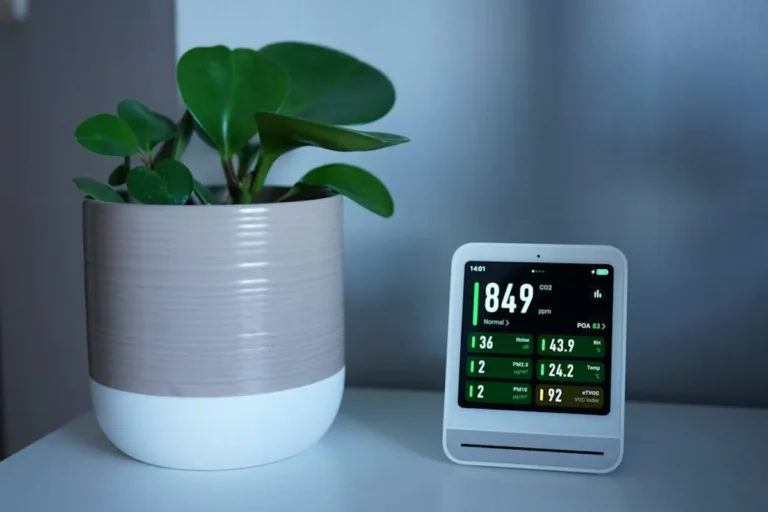
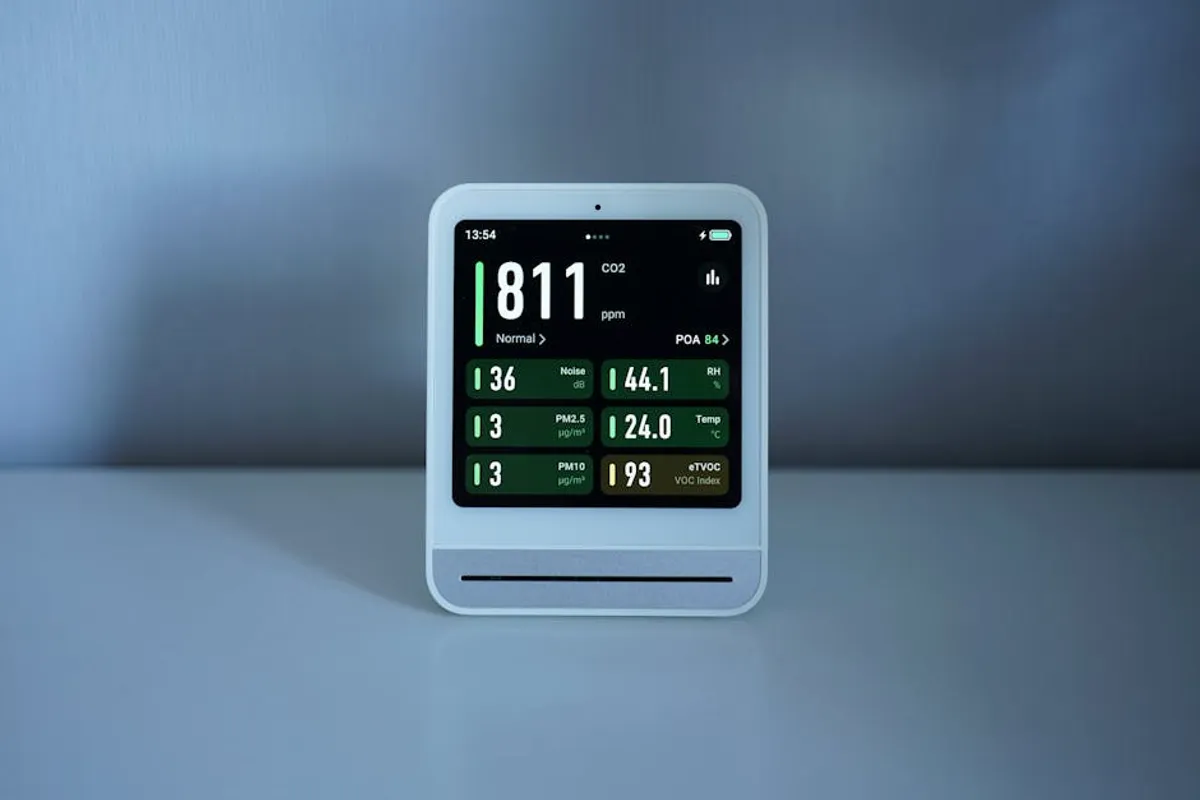
Effective IAQ management relies on accurate measurement and monitoring. Key metrics include carbon dioxide (CO2) levels, which serve as an indicator of ventilation effectiveness and occupant density; Volatile Organic Compound (VOC) concentrations, which signal off-gassing from products and materials; and Particulate Matter (PM2.5/PM10) levels, indicating airborne dust, allergens, and combustion byproducts. Relative humidity and temperature are also critical for comfort and mold prevention. Consumer-grade IAQ monitors offer real-time data for general awareness, often tracking CO2, VOCs, and PM2.5. Professional-grade equipment, used by IAQ specialists, provides more precise measurements across a wider range of pollutants, often with calibration capabilities for greater accuracy in diagnostic assessments.
Pro Tip: While consumer-grade IAQ monitors provide useful real-time insights for general awareness, their sensors may have varying degrees of accuracy and calibration stability. For critical applications, compliance assessments, or diagnosing persistent issues, professional IAQ testing using calibrated equipment is essential to ensure reliable data and actionable recommendations.
Strategies for Improving Indoor Air Quality
Source Control
The most effective strategy for improving IAQ is to eliminate or reduce pollutant sources. This preventive approach minimizes the need for extensive ventilation or air purification.
- Material Selection: Choose low-VOC paints, sealants, flooring, and furnishings to reduce chemical off-gassing. Look for certifications like GREENGUARD or Cradle to Cradle.
- Product Substitution: Opt for natural or fragrance-free cleaning products, personal care items, and air fresheners.
- Ventilation during Activities: Use exhaust fans during cooking, showering, and cleaning to remove pollutants at their source.
- Maintenance: Regularly clean and maintain appliances, especially those involving combustion, to ensure efficient operation and prevent pollutant release.
- Pest Management: Implement integrated pest management to reduce pesticide use indoors.
Enhanced Ventilation
When source control is insufficient, increasing ventilation rates helps dilute remaining pollutants. This can involve:
- Optimizing Natural Ventilation: Strategically open windows and doors when outdoor air quality is good to create cross-ventilation.
- Upgrading Mechanical Systems: Install or upgrade to higher-efficiency mechanical ventilation systems, such as ERVs or HRVs, which provide controlled fresh air while minimizing energy loss.
- Targeted Exhaust: Ensure proper functioning and usage of local exhaust fans in kitchens, bathrooms, and laundry areas to remove moisture and specific pollutants.
Air Purification Systems
Air purification systems supplement source control and ventilation by actively removing airborne contaminants.
- HEPA Filters: High-Efficiency Particulate Air (HEPA) filters are highly effective at capturing particulate matter, including dust, pollen, pet dander, and mold spores, down to 0.3 microns with 99.97% efficiency. They are commonly found in portable air purifiers and some HVAC systems.
- Activated Carbon Filters: These filters are designed to absorb gaseous pollutants, such as VOCs and odors, through a process called adsorption. They are often used in conjunction with HEPA filters.
- UVGI (Ultraviolet Germicidal Irradiation): UV-C lamps can be installed in HVAC systems to inactivate airborne viruses, bacteria, and mold spores as air passes through the ducts. Their effectiveness depends on exposure time and intensity.
Practical IAQ Management
Effective indoor air quality management is an ongoing process that integrates proactive design choices with diligent operational practices. Prioritize source reduction by selecting low-emission materials and products, and ensure robust ventilation systems are in place and properly maintained. Regular monitoring provides the data needed to identify potential issues before they escalate, allowing for timely adjustments to ventilation, filtration, or humidity control. By adopting a comprehensive approach that combines these strategies, occupants can benefit from healthier, more comfortable, and more productive indoor environments, while also protecting the structural integrity of the building.
Frequently Asked Questions About Indoor Air Quality
What are the most common indoor air pollutants?
Common indoor air pollutants include Volatile Organic Compounds (VOCs) from products and materials, particulate matter (PM2.5) from dust, smoke, and allergens, carbon monoxide (CO) from combustion, and biological contaminants like mold, bacteria, and viruses.
How does humidity affect indoor air quality?
High humidity (above 60%) promotes mold growth, dust mites, and bacterial proliferation, while very low humidity (below 30%) can dry out respiratory passages and skin, increasing susceptibility to illness. Optimal indoor humidity is typically between 40% and 55%.
Can houseplants improve indoor air quality?
While houseplants can contribute marginally to air purification by absorbing some VOCs and producing oxygen, their impact on overall indoor air quality in a typical residential or commercial setting is generally minimal compared to effective ventilation and filtration systems.
How often should HVAC filters be changed for better IAQ?
HVAC filters should typically be changed every 1 to 3 months, depending on the filter type, system usage, presence of pets, and outdoor air quality. Regular filter replacement is crucial for maintaining filtration efficiency and preventing contaminant buildup within the system.