Navigating the options for home climate control often leads to considering smart thermostats. These devices move beyond basic programmable schedules, offering advanced features designed to enhance comfort, optimize energy consumption, and provide greater control over your indoor environment. For many homeowners, the primary appeal lies in the potential for energy savings and the convenience of remote management. However, selecting the right smart thermostat involves understanding its core functionalities, assessing compatibility with existing systems, and evaluating how it integrates into a broader smart home setup. This guide aims to clarify these points, helping you make an informed decision about integrating this technology into your living space. For those curious about the inner workings, understanding how these devices actually work can demystify their advanced capabilities.
Understanding Smart Thermostat Core Functions
At their foundation, smart thermostats perform the same basic task as traditional thermostats: regulating your home's heating and cooling. The "smart" designation comes from a suite of capabilities that automate and optimize this process, providing both convenience and efficiency.
Remote Access and Control
One of the most immediate benefits of a smart thermostat is the ability to control your home's temperature from virtually anywhere. Most smart thermostats connect to your home's Wi-Fi network, allowing you to adjust settings via a dedicated smartphone app. This means you can raise the temperature on your commute home in winter, or lower it from your office on a hot day, ensuring comfort upon arrival without wasting energy when the house is empty. This functionality extends beyond simple temperature adjustments to include scheduling changes, fan control, and mode switching (heat, cool, auto).
Scheduling and Automation
While traditional programmable thermostats offer fixed schedules, smart thermostats introduce more dynamic automation. Many models feature adaptive scheduling, learning your preferences and daily routines over time to build an optimized temperature schedule. This can involve automatically adjusting temperatures based on occupancy, time of day, or even local weather forecasts. The goal is to maintain comfort when you're home and conserve energy when you're away or asleep, often without requiring manual intervention after an initial learning period.
Energy Usage Reporting
A critical function for homeowners focused on efficiency, energy usage reporting provides insight into your heating and cooling patterns. Smart thermostats track how often and for how long your HVAC system runs, correlating this data with temperature settings and external factors. This information is typically presented through the accompanying app, often with daily, weekly, or monthly summaries. These reports help identify peak usage times, potential inefficiencies, and opportunities for further energy savings by adjusting schedules or settings.
Key Considerations Before Purchase
Before investing in a smart thermostat, several practical factors require assessment to ensure compatibility, optimal performance, and a smooth user experience.
Compatibility with Existing HVAC Systems
The most crucial consideration is whether a smart thermostat will work with your current heating, ventilation, and air conditioning (HVAC) system. Different HVAC systems (e.g., conventional single-stage, multi-stage, heat pump, boiler) require specific wiring configurations. Many smart thermostats require a "C-wire" (common wire) to provide continuous power, as they cannot rely solely on battery power or "power stealing" from the heating/cooling wires for their advanced features and Wi-Fi connectivity. Verifying your existing wiring and HVAC system type is an essential first step, often requiring a look at your current thermostat's wiring panel.
Integration with Smart Home Ecosystems
For users with existing smart home devices, the ability of a smart thermostat to integrate seamlessly into that ecosystem is important. Compatibility with platforms like Amazon Alexa, Google Home, or Apple HomeKit allows for centralized control, voice commands, and the creation of automated routines involving multiple devices. For instance, a routine could adjust the thermostat, turn off lights, and lock doors when you leave the house. Choosing a thermostat that supports your preferred smart home platform simplifies management and enhances overall system utility.
Installation Complexity
While many smart thermostats are designed for DIY installation, the complexity varies. Basic installations might involve disconnecting a few wires and reconnecting them to the new device. However, if a C-wire is missing, or if your HVAC system is complex (e.g., multi-zone or proprietary wiring), professional installation may be necessary. Manufacturers typically provide detailed wiring diagrams and online guides, but assessing your comfort level with electrical work before starting is advisable.
Pro Tip: Before purchasing, remove your existing thermostat's faceplate and photograph the wiring. This image is invaluable for checking compatibility with manufacturer guides and for troubleshooting during installation. If you see fewer than four wires or no "C" wire, anticipate needing an adapter or professional help.
Data Privacy and Security
Smart thermostats collect data about your home's environment and your usage patterns. This data is often stored in the cloud and used to refine performance, provide energy reports, and sometimes for third-party integrations. Understanding a manufacturer's data privacy policy, including how your data is collected, stored, and used, is important. Look for devices from reputable brands that prioritize data encryption and offer clear privacy controls to protect your personal information.
Common Smart Thermostat Features Explained
Beyond the core functions, smart thermostats offer a range of specialized features that cater to different user needs and preferences.
- Geofencing: This feature uses the location services on your smartphone to determine if you are home or away. When you leave a predefined perimeter, the thermostat can automatically adjust to an energy-saving temperature. As you approach home, it can pre-warm or pre-cool the house, ensuring comfort upon your return without continuous heating or cooling while you're out.
- Learning Capabilities: Some advanced models can "learn" your preferences and habits over time. By observing when you adjust the temperature, these thermostats can build an optimized schedule automatically, often anticipating your needs without explicit programming. This reduces manual adjustments and can lead to more consistent energy savings.
- Zoned Control: For homes with multiple heating and cooling zones, smart thermostats can offer individual control over each area. This typically involves installing multiple smart thermostats or sensors, allowing you to maintain different temperatures in different rooms or sections of the house based on occupancy or preference, preventing energy waste in unused areas.
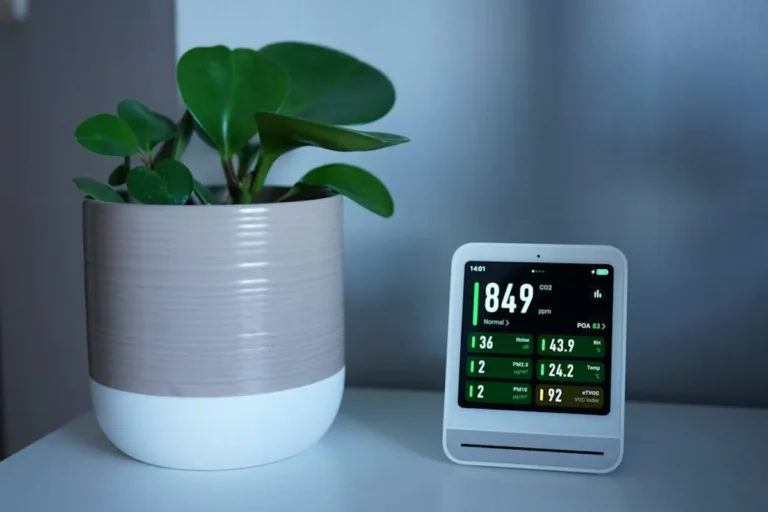
- Air Quality Monitoring: Certain smart thermostats incorporate sensors to monitor indoor air quality, detecting levels of volatile organic compounds (VOCs), humidity, or particulate matter. They can then alert you to poor air quality and, in some cases, integrate with your HVAC system to activate fans or air purifiers to improve the environment.
Optimizing Home Climate and Energy Use
Implementing a smart thermostat offers more than just a technological upgrade; it provides a pathway to more efficient home management and enhanced comfort. Begin by ensuring your chosen device is fully compatible with your HVAC system to avoid installation complications. Once installed, take advantage of the remote access capabilities to fine-tune your settings, preventing energy waste when you're away and ensuring a comfortable environment upon your return. Utilize the scheduling and learning functions to automate temperature adjustments, allowing the system to adapt to your lifestyle without constant manual input. Regularly review the energy usage reports to identify patterns and areas for further optimization, which can lead to measurable reductions in your utility bills. Finally, integrate the thermostat with your existing smart home ecosystem for a cohesive and convenient control experience, unlocking unified command over your home's environment.
Frequently Asked Questions
Do smart thermostats really save money?
Yes, smart thermostats can significantly reduce energy consumption and utility costs. Savings are typically achieved through optimized scheduling, remote control to prevent unnecessary heating or cooling, and features like geofencing or learning algorithms that adapt to your occupancy patterns. The exact savings depend on your climate, home insulation, and how diligently you use the thermostat's features.
Are smart thermostats difficult to install?
Installation difficulty varies. Many basic installations are designed for DIY, requiring fundamental wiring knowledge and adherence to manufacturer instructions. However, if your system lacks a C-wire, or if you have a complex HVAC setup (e.g., multi-zone, heat pump), professional installation might be necessary to ensure correct wiring and functionality.
What is a C-wire and do I need one?
A C-wire (common wire) provides continuous 24V power to the thermostat, essential for powering advanced features like Wi-Fi connectivity, backlighting, and touchscreens. Most smart thermostats require a C-wire for reliable operation. Without it, some models might attempt to "power steal" from other wires, which can lead to intermittent power, flickering screens, or damage to your HVAC system. Always check your existing wiring for a C-wire before purchase.
Can smart thermostats control multiple zones?
Yes, many smart thermostat systems support zoned control. This typically involves installing multiple smart thermostats or sensors in different areas of your home. Each device controls the heating and cooling for its specific zone, allowing you to maintain different temperatures in various rooms or sections of the house based on occupancy or preference, thereby optimizing comfort and energy use across your entire home.