HVAC upgrade decisions get sold with energy savings projections that often don't materialize. Manufacturers project favorable savings; commissioning produces different results; long-term operation produces yet different results.
I've commissioned HVAC upgrades across approximately 60 commercial buildings over twelve years. Some upgrades genuinely paid back. Others didn't. The patterns are clear once you see enough cases.
Here are eight upgrades that consistently produce real payback and five that consistently don't.
The 8 upgrades that pay back
1. Variable frequency drives on substantial fan motors
VFDs allow fan motors to run at speeds matching actual air demand rather than at full speed continuously.
Real payback: Typically 2-4 years on substantial commercial systems.
Why it works: Fans typically operate well below design capacity most hours. The energy savings from speed reduction are substantial.
Where it doesn't work: Constant-volume systems that genuinely need full flow continuously. Not all fans are good VFD candidates.
2. LED retrofits in spaces with substantial HVAC interaction
LED replacement of fluorescent lighting reduces both lighting energy and cooling load.
Real payback: 2-5 years depending on operating hours and electricity rates.
Why it works: Double benefit — lighting energy reduction plus reduced cooling load from lower lamp heat output.
Where to focus: High-occupancy spaces with long operating hours produce best returns.
3. Demand-controlled ventilation in spaces with variable occupancy
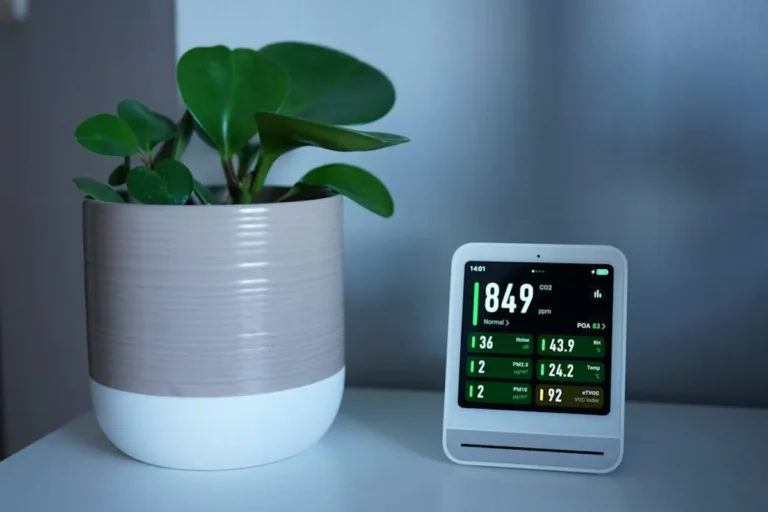
CO2 sensors that modulate outside air based on actual occupancy rather than design occupancy.
Real payback: 3-5 years in spaces with substantial variation.
Why it works: Many commercial spaces have substantial unoccupied periods during normal operation. Reducing outside air during those periods saves heating/cooling energy.
Where it works best: Conference rooms, training spaces, occasional-use spaces where occupancy varies dramatically.
4. Programmable thermostats with substantial setback in unoccupied periods
Replacing manual thermostats with programmable ones in spaces with regular unoccupied periods.
Real payback: Often less than 2 years.
Why it works: Substantial setbacks during unoccupied hours produce measurable savings. The programmable thermostats are inexpensive.
Where it works best: Office buildings with consistent operating hours, schools, retail with regular closing hours.
5. Air handler economizer enabling and maintenance
Many commercial buildings have economizers that don't actually function due to broken dampers, failed sensors, or commissioning errors.
Real payback: Often less than 1 year for fixing broken economizers.
Why it works: Functional economizers provide free cooling during favorable outdoor conditions. Broken economizers represent missing savings.
Where to focus: Existing buildings with installed economizer equipment that may not be functioning.
6. Pump VFDs for variable-flow hydronic systems
Similar to fan VFDs but for chilled water and heating water pumps.
Real payback: 3-5 years on substantial systems.
Why it works: Hydronic pump energy is substantial in commercial buildings. Variable speed operation matches flow to actual load.
Where it works best: Substantial hydronic systems with variable-volume distribution.
7. Building envelope improvements in specific situations
Targeted envelope improvements (specific roof insulation upgrades, window replacements at end-of-life) in buildings with major HVAC loads.
Real payback: 5-10 years typically.
Why it works: Reducing building heat gain/loss reduces HVAC energy proportionally.
Where it works best: Buildings with substantial existing envelope problems and substantial HVAC operation.
Caveat: Wholesale envelope upgrades rarely pay back. Targeted upgrades to specific weak points often do.
8. Boiler and chiller replacements at end-of-life
Replacing boilers and chillers near end of life with efficient modern equipment.
Real payback: 5-12 years depending on equipment age and operating hours.
Why it works: Major efficiency improvements between old and new equipment. The replacement was needed anyway; the efficiency upgrade is incremental.
Where it works best: Equipment approaching end of useful life that needs replacement regardless.
The 5 upgrades that don't pay back
1. Whole-building "smart building" platforms
Comprehensive building automation platforms promising substantial savings through integrated control.
Why it doesn't pay back: The integration cost is substantial. The actual savings are typically modest. Specific upgrades within smart building scope (VFDs, demand-controlled ventilation, etc.) produce most of the available savings without requiring the full platform.
Where it might work: Very large facilities where the platform overhead is amortized across substantial savings opportunities.
2. Solar PV without substantial subsidies
Commercial solar installations have specific economics that often don't justify their costs without substantial subsidy support.
Why it often doesn't pay back: Capital cost remains substantial. Net metering economics vary by jurisdiction. Maintenance over equipment life adds cost.
Where it works: Specific jurisdictions with strong subsidy support and high electricity rates. Specific facility types (data centers, certain industrial) with substantial daytime electrical load.
3. Replacing functional equipment for efficiency reasons
Replacing equipment that's working acceptably for efficiency reasons typically doesn't produce payback.
Why it doesn't pay back: The capital cost of replacement plus disposal of working equipment exceeds energy savings over reasonable time horizons.
Where it might work: Equipment near end-of-life where replacement is justified anyway. The efficiency upgrade is incremental in those cases.
4. Dehumidification upgrades in mild climates
Adding sophisticated dehumidification equipment in climates that don't demand it.
Why it doesn't pay back: Equipment cost is substantial. Operating savings are modest in mild climate. Annual hours of dehumidification benefit are limited.
Where it works: Hot/humid climates where dehumidification load is substantial. Specific facility types with humidity-sensitive operations.
5. Air-side heat recovery in non-airtight buildings
Heat recovery ventilators in buildings with substantial uncontrolled air leakage.
Why it doesn't pay back: The recovery requires controlled air paths. Uncontrolled leakage bypasses the recovery system. The savings projections assume building characteristics that don't exist.
Where it works: Tight buildings with controlled ventilation paths. Adding heat recovery to a leaky building produces limited returns.
What separates the categories
The upgrades that pay back share characteristics:
Address specific identified inefficiencies rather than promising general improvements.
Have clear physical mechanisms for energy reduction (less fan energy from VFDs, less lighting energy from LEDs, less ventilation from DCV).
Apply to specific situations where the savings opportunity exists.
Have predictable energy savings that can be calculated reliably.
The upgrades that don't pay back share different characteristics:
Promise general improvements without specific mechanisms.
Apply to general situations rather than specific opportunities.
Have variable savings dependent on operational conditions.
Often involve substantial capital cost relative to savings potential.
The pattern allows reasonable evaluation of new upgrade proposals.
How to evaluate specific upgrade proposals
For any HVAC upgrade proposal, useful evaluation:
What's the specific energy reduction mechanism? If the answer is vague, the savings projections may not be reliable.
What's the assumed operating profile? Savings projections depend on operating conditions. Different conditions produce different savings.
What's the maintenance cost over equipment life? Capital plus maintenance affects total economics.
What happens if the equipment fails? Some upgrades have substantial backup costs when they fail.
How sensitive is payback to specific assumptions? Payback projections that depend on optimistic assumptions warrant skepticism.
The questions enable better evaluation than relying on manufacturer projections alone.
Common manufacturer claims to be skeptical of
Specific patterns suggest unreliable savings projections:
Savings claims based on theoretical operating profiles rather than realistic ones.
Savings claims that don't account for regional climate variations.
Savings claims that ignore maintenance and operation costs.
Savings claims based on best-case scenarios as typical results.
Specific case studies presented without methodology disclosure.
Each pattern indicates that manufacturer projections may not match actual results.
The maintenance reality
Maintenance costs substantially affect upgrade economics:
VFDs require maintenance and have specific failure modes.
LED fixtures last longer than fluorescent but specific failures still occur.
Sensors require calibration and replacement over time.
Control systems require expert support that costs money.
The maintenance costs across equipment life often exceed initial energy savings projections.
Realistic payback evaluations include maintenance costs.
What about climate change considerations
Some upgrades make sense for climate reasons even when economics are marginal:
Reducing building energy reduces emissions. Climate-conscious organizations may pursue upgrades with longer paybacks for carbon reasons.
Specific renewable integrations (heat pumps replacing combustion equipment) may have stronger climate cases than energy economics alone suggest.
Demand reduction supports broader grid management goals.
For climate-conscious organizations, the calculation may differ from pure energy economics. The differentiation should be explicit rather than implicit.
Implications for facility managers
For facility managers evaluating upgrade decisions:
Apply skepticism to manufacturer projections.
Focus on upgrades with specific identified mechanisms in your specific facility.
Consider end-of-life replacement timing for major equipment.
Maintain existing systems before adding new capabilities.
Calculate total cost of ownership rather than initial cost only.
Better facility decisions produce better building economics across operational years.
Implications for engineers
For engineers specifying upgrades:
Match upgrade specifications to actual facility conditions.
Provide realistic savings projections based on facility-specific analysis.
Specify equipment with predictable maintenance characteristics.
Consider long-term operation in initial design.
Document assumptions and limitations clearly.
Better engineering produces better building outcomes.
The honest summary
Eight HVAC upgrade categories consistently pay back when applied to appropriate situations. Five categories consistently don't justify their costs.
The distinction depends on specific mechanisms, specific facility conditions, and realistic operating assumptions. Generic upgrade pursuits without these considerations often produce disappointing results.
For facility managers and engineers, the framework supports better evaluation of upgrade opportunities. The framework doesn't guarantee success but improves the probability of decisions that actually produce expected results.
For the broader building industry, more accurate upgrade evaluation supports better aggregate decisions about how to invest in building improvements.
Apply the framework. Evaluate specific situations. Make defensible decisions. The buildings will operate more efficiently as a result.