The building sensor market is full of products promising substantial operational improvements. Most don't deliver value proportional to their cost and complexity.
Some sensors genuinely improve building operations through specific mechanisms with measurable outcomes. The seven sensors that follow have consistent track records of justifying their cost across the buildings I've worked with.
1. CO2 sensors for ventilation control
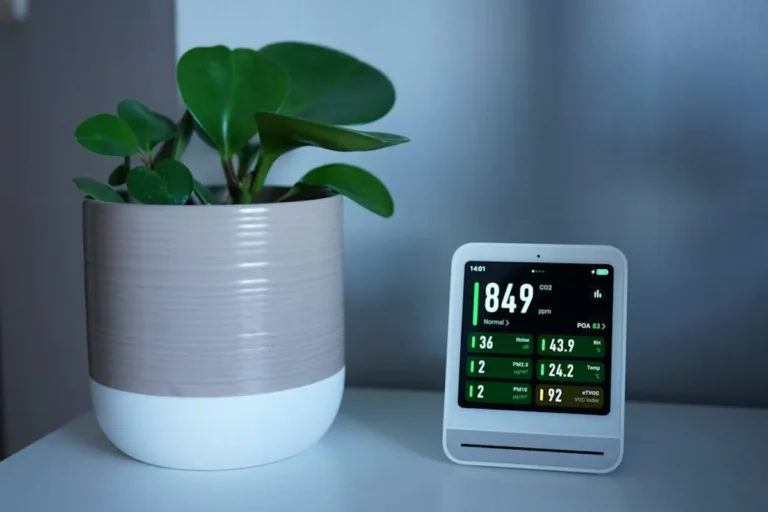
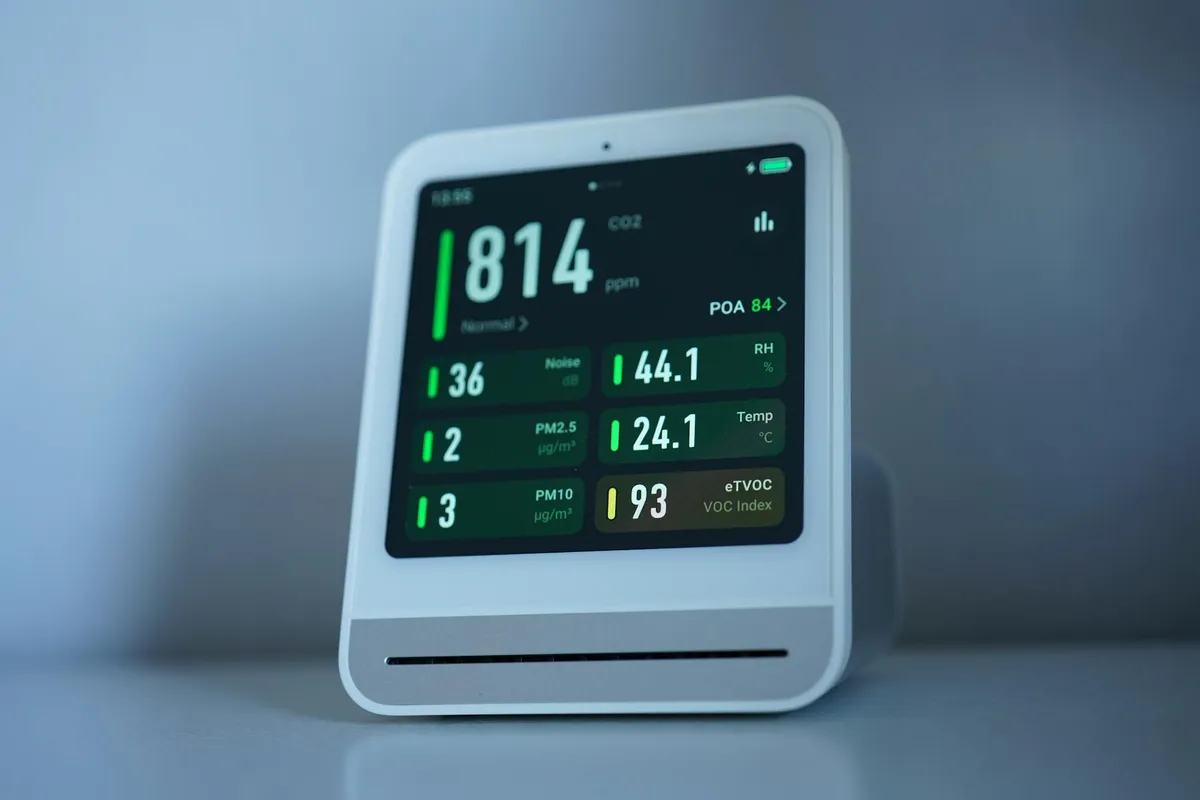
CO2 sensors enable demand-controlled ventilation, reducing outside air during low-occupancy periods.
Why it works: Most commercial spaces have substantial unoccupied periods during normal operation. Reducing outside air during those periods produces measurable energy savings without compromising air quality.
Real impact: 10-20% reduction in heating/cooling energy in spaces with variable occupancy.
Where to deploy: Conference rooms, training spaces, classrooms, occasional-use spaces.
Cost: $200-400 per sensor plus integration. Pays back quickly in appropriate spaces.
2. Differential pressure sensors for filter monitoring
Sensors that measure pressure drop across filters indicate when filters need replacement based on actual loading rather than schedule.
Why it works: Filters often get replaced too early (wasted material) or too late (excessive fan energy). Pressure-based replacement optimizes both.
Real impact: Reduced filter cost plus reduced fan energy from optimal filter loading.
Where to deploy: Substantial air handlers with significant filter loading.
Cost: $300-600 per sensor with substantial payback through optimal maintenance.
3. Outdoor air temperature and humidity sensors
Quality outdoor air sensors enable proper economizer operation and other weather-dependent control.
Why it works: Substantial energy decisions depend on outdoor conditions. Inaccurate or missing data causes incorrect operational decisions.
Real impact: Proper economizer operation, correct equipment staging, accurate reset schedules.
Where to deploy: Every building with HVAC operation that responds to outdoor conditions.
Cost: $500-1500 per sensor depending on accuracy requirements.
4. Occupancy sensors in variable-use spaces
Occupancy sensors that detect actual presence rather than relying on scheduled assumptions.
Why it works: Spaces are often unoccupied during scheduled occupied hours and occasionally occupied during scheduled unoccupied hours. Sensors capture actual usage.
Real impact: Reduced lighting and HVAC operation during actual unoccupied periods.
Where to deploy: Conference rooms, restrooms, storage areas, occasional-use spaces.
Cost: $50-150 per sensor with quick payback.
5. Submetering for major loads
Electrical and gas submetering for major equipment categories.
Why it works: Aggregate building energy data doesn't reveal which specific systems use what energy. Submetering enables targeted improvement decisions.
Real impact: Identifies specific waste opportunities. Supports targeted maintenance and upgrade decisions.
Where to deploy: Major HVAC equipment, major electrical loads, gas-fired equipment.
Cost: $1000-5000 per major submeter installation.
6. Hot water temperature sensors
Quality temperature sensors on hot water systems for proper temperature control and trending.
Why it works: Hot water temperature affects both energy consumption and occupant satisfaction. Quality sensors enable proper control and identification of operational issues.
Real impact: Proper hot water temperature, identification of equipment issues, energy savings from optimal temperature control.
Where to deploy: Domestic hot water systems, hot water heating loops.
Cost: $100-400 per sensor.
7. Damper position feedback
Position sensors on dampers that confirm actual position rather than commanded position.
Why it works: Dampers frequently fail in ways that don't match commanded position. Sensors detect these failures that otherwise go undetected.
Real impact: Identification of stuck or broken dampers that produce significant energy waste.
Where to deploy: Major air handler dampers, economizer dampers, mixing dampers.
Cost: $200-500 per damper with substantial payback.
What makes these sensors valuable
The valuable sensors share characteristics:
Provide specific data that enables specific decisions.
Address specific known operational problems.
Produce data that can be used effectively without sophisticated analysis.
Have predictable failure modes and replacement requirements.
Cost moderately relative to the benefits they enable.
Sensors that don't share these characteristics typically don't justify their costs.
Sensors that often don't justify their cost
Some sensor categories often don't deliver expected value:
VOC sensors for ventilation control. The data is variable and unclear how to act on it. CO2-based control is generally more reliable.
People-counting sensors for occupancy. The data is more sophisticated than typical operational decisions require. Simple occupancy sensors usually suffice.
Sub-second granularity vibration sensors. The data overwhelm operations capability. Less granular monitoring usually suffices.
Sophisticated air quality sensors. Most buildings don't have substantial air quality issues that justify the sensor cost.
Energy harvesting wireless sensors. Often unreliable. Wired or battery sensors typically more practical.
Each category has specific applications where it makes sense but isn't typically justified.
Sensor implementation realities
Sensor implementations have specific realities:
Calibration matters substantially. Uncalibrated sensors produce unreliable data.
Maintenance is real. Sensors fail, drift, and require periodic attention.
Integration cost typically exceeds sensor cost. Wiring, configuration, and BAS integration add substantial cost.
Data without action produces no value. Sensor investments require operational practices that act on the data.
Realistic implementation planning produces better outcomes than aspirational sensor deployments.
Building specific sensor strategies
Different building types benefit from different sensor strategies:
Office buildings: CO2 sensors, occupancy sensors, basic submetering.
Educational buildings: Heavy CO2 monitoring, occupancy sensors, temperature feedback.
Healthcare buildings: Substantial monitoring across all categories due to comfort and safety requirements.
Retail buildings: Occupancy sensors, temperature monitoring, energy submetering.
Industrial buildings: Specific sensors for specific processes plus standard building monitoring.
Match sensor strategy to building type and operational needs.
The data challenge
Sensor deployment produces data that requires effective use:
Trending requires storage and review.
Alarms require tuning and response procedures.
Analysis requires capability and time.
Action on findings requires authority and resources.
Buildings that can't effectively use sensor data don't benefit from sensor deployment regardless of sensor quality.
Sensor deployment should match operational capability for using the data.
The maintenance reality
Sensor maintenance affects long-term value:
Calibration drift requires periodic recalibration.
Sensor failures require replacement.
Mounting and connection issues require attention.
Documentation needs to be maintained as sensors change.
The maintenance cost across sensor lifetime affects total economics.
Realistic maintenance planning supports sustained sensor value.
The honest summary
Seven sensor categories consistently improve building operations when properly deployed and used. The framework excludes substantial sensor categories that don't typically justify their cost.
For facility managers and engineers, the framework supports better sensor specification decisions. Buildings get the monitoring benefits available without paying for sensors that don't deliver.
For sensor specification work, the categorization enables more efficient decisions. Specifying valuable sensors and excluding less valuable ones improves outcomes.
For the broader building industry, more accurate sensor evaluation supports better aggregate building decisions. The marketing-driven sensor market includes substantial products that don't justify their cost.
The sensors that work, work consistently. The sensors that don't work, don't work for predictable reasons. Match sensor deployment to actual operational need and capability for using the data.
Apply the framework. Specify thoughtfully. Use the data. The buildings will operate better as a result.